Kitchen fires, why so common and what can I do?

In the United States cooking is the most common cause of fire. Most municipalities report the kitchen as the leading room of origin. We often cook on mental automatic; not paying attention to the task at hand, multi-tasking, cooking while sleepy, or hindered by alcohol or medication.  Children are doing homework, the television is running, laundry and other tasks take our attention away for a moment. What ever the distraction; a stovetop fire can occur in an instant.  Most resident involved in kitchen fires say something on the line of…”I don’t know what happened.  I looked a way for a moment.”   Here are some simple tips to help keep you and your family safe.

Alway stay in the kitchen while cooking on the stovetop.

Keep the stovetop clean. No grease, or flammable items on burner area. Keep cloth pot holders and dish towels off the stovetop.  Also clean the pans beneath the burners. They do collect oils, grease and burnt food. This can all catch fire.

Never store a pot of oil on the back burner. (A la Grandma’s infamous cast iron pot of used oil, saved for the next time). It too, can accidentally catch fire.

Always stay in the home while cooking in the oven.  If you must leave for a short time, turn the oven off and resume when you return.

Keep a 3 ft. rule.  The rule is keep a kid and pet-free zone around the range and oven when cooking. Little hands and puppy dog tails, can get injured or cause a trip hazard, to the cook.

Keep  a cookie sheet, tight fitting fitting lid, or better yet, a fire extinguisher handy.

If there is a fire in a pot DO NOT 1.  Move the pot. Remember you have flaming liquid and it may spill.   DO NOT 2. Pour water on the pot.  Remember water and oil do not mix.  As the water sinks into the oil it expands converting into steam at a rate of 1603:1.  It creates a volcanic looking effet.  This can throw hot flaming grease on you, or rapidly spread the fire.

Recommended Actions to take include, call 9-1-1 first and sound the alarm so every one knows knows to evacuate. You should already have an escape plan, everyone from oldest to youngest knows where to meet outside the home. If you can safely extinguish the fire use your handy fire extinguisher.  Remember: pull, aim, squeeze and sweep.  Pull the pin. Aim the nozzle at the base of the fire (that which is burning) squeeze the handle and sweep the chemical back and forth across the base of the fire.  Then evacuate the kitchen and  close the door!

Let the firefighters check to be sure the fire is out.
 

CPR cost and scheduling

To schedule a CPR/ AED or First Aid/ CPR training please contact 843-860-4321  or firegir411@gmail.com

We bring the class to you. All supplies are included.

American Heart or ASHI CPR/AED is a 3 1/2- 4 hour class covering CPR, choking and how to use an Automated External Defibrillator (AED) for adults, children and infants.

There is a two student minimum at a rate of $140.00

Three students or more per class, add  $70.00 per student

American Heart or ASHI  First Aid/ CPR covers what to do in various emergencies ranging from trauma to medical and environment. The class also includes CPR for Adults, Children and Infants along with the use of AED. This class will take approximately 7 hours to complete.

There is a two student minimum for $200.00

for each additional student per class, add $75.00.

We look forward to serving you.

Do you know where your exits are?

Have you ever walked into a restaurant and not known where the extra exits were?  What would happen if there was a fire, explosion or active shooter near the front door you came in?  Would you and your family know how to get out of the space?

Here is your homework…Next time you go out to eat, scope out all the exits available to you.  Are they blocked, are the locked? Can you easily get to them and do you know where they go?  Would you know how to save yourself or your family if you needed to easily escape a new place.

Which seat is the right seat for your little one?

A few recent brushes with indifferent parents call The Fire Girls to review the basics of “Is your Child in the Right Seat?”
Safe Kids Worldwide ran a campaign last year asking parents if their children are in the right seat.
How many parents, no matter how loving, really know which seat is the most appropriate for the child riding in the car? Some simply ask what is the state law? Truth told, laws vary widely from state to state. As technicians certified through the Safe Kids Worldwide training program The Fire Girls want to give parents the tools to aim higher than the minimum. The real question a parent should ask is; “which type of seat will save my child in a crash?”
An infant, one under one-year-of-age must be rear facing in all states. Some are going to the two-year-old best practice recommended by the Academy of Pediatricians. Best practice (that which will keep your child safest) is to max out the seat weight or height limitations which ever comes first and the child should be closer to two.
Most parents will tell you that their child outgrew the rear-facing-only seat with base, before baby’s first birthday. This child must go into another rear-facing seat with a higher weight or height limit. Infant carriers are often the first seat for baby because it is easy to use. The infant carrier is the basket looking one that allows the caregiver to remove the child from the car, seat and all, when traveling. It also has a five-point-harness (a harness that connects at both shoulders, both hips and connects at the crotch).
Once the child outgrows the infant seat, baby may still not be ready; by law, or best practice, to be forward-facing.  One mommy turned the seat around when baby maxed out the weight thinking that the seat was fine that way. As long as she is not in a crash or has to stop fast, it is. The problem lies in the risk of death with a sudden stop. When is the last time you had to slam on the brakes? This seat; in that position will fly forward with the child in it, due to the misuse of the seatbelt and the position of the seat. The rear-facing-only seat with base is, as the name suggests, rear-facing ONLY. This little basket-looking seat may NEVER be forward facing. Due to the design, misusing it this way can result in death. Some of these seats have a maximum weight for baby of 22-pounds, some 30-pounds, some 35-pounds. After that, there is an option of purchasing a seat that begins rear-facing, but can be moved to the forward facing position in time. It is called a Convertible seat. This seat can grow with baby from five-pounds till the maximum weight and height. The maximum weight can range from 35-pounds to 65-pounds or higher, depending on the seat. As you can see, researching seats can become a little bit intimidating. Just remember the seat must fit the child’s development and the vehicle.
The best practice is to keep the child rear facing until its second birthday or when he or she outgrows the weight or height limits of the rear-facing seat. Some European countries require the child to remain rear-facing until four or five-years-old. In this rear-facing position remember that the harness straps must be, ‘at or below’ the child’s shoulders per all manufactures’ instructions. This is universal due to the physics behind a child being rear-facing. Think about it as a gentle, yet firm, hand holding your child and protecting your child during a crash.
When the child grows into the forward-facing position, the straps change. the placement is now, at or just above the child’s shoulders. Forward-facing seats for toddlers, those children two-years-old and up need to have a five-point-harness. Think about race car drivers; they are always in five-point harnesses. the below link shows a race at Daytona in the Coke Zero 400 Race in July 2015.
http://www.nascar.com/en_us/news-media/articles/2015/7/5/austin-dillon-in-his-own-words-daytona-crash-coke-zero-400.html

Now, think about how safe the driver of the number 3 car, Austin Dillion, was in a five-point- harness. Think about this crash when you want to move your child into a booster seat early. Shouldn’t your child should stay in the safety harness for as long as possible. When we move from the safety seat to the booster seat, we also move from the five-point-harness to three points, (the shoulder and two hips).
The booster seats usually have a minimum weight of at least 40 pounds and can run up past 100 pounds. Another mommy encountered by the Fire Girls had her one-year-old child in a booster seat with the shoulder portion of the seat belt behind the child. Think about that baby as a missile that will shoot through the car if there is a crash. The baby will collide with the front seats, the dash board or the windshield. Rescuers often describe them as baby rockets. The baby will break before the car does.
The last example of indifference is a mommy who was pulling out from a school with two toddlers, about three-years-old seat belted together in the front seat of the car. Again, the risk is, baby missile, even at a low impact the children could forcefully crash together and she risks them both shooting into the windshield or dashboard if she were in a crash. Add that an airbag will deploy at 200 miles per hour into their faces, there would not be much hope for their survival.
Both were small, in need of a five-point harness forward facing seat placed in the back seat of the car.
These are three extreme examples of the errors many make on a smaller scale in order to make it easier for the parent. Is your child in the seat that will keep him or her the safest in the event of a crash?
Call us with any questions you may have regarding safety seats or for a safety seat fitting appointment. (843) 860-4321.

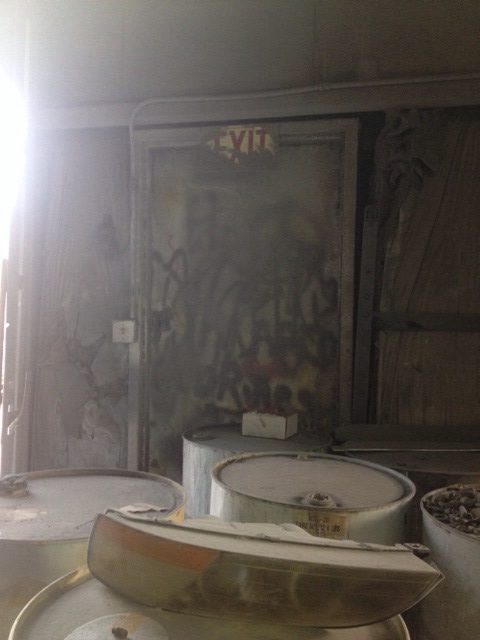
A proper exit?

20140626-091543-33343765.jpg

Fire code is a difficult thing at times for the un-indoctrinated, but when it comes to exit pathways it is clear and specific. We discussed design issues about numbers of exits and width of them based on the occupancy of the building. Once these are in place and the building is open, it is up to the tenant to keep them visible and accessible.

In general, the hallways or pathway to the exit must remain un-obstructed. One may not diminish the width of an exit with any object. No trash cans, no big plants, no small plants, nick-knacks or doo-dads allowed. Nothing you could walk into or trip over. The reason is fairly simple, when the fire occurs the people in the building may be disoriented, blinded by smoke or simply making a hasty retreat to the outside. You, as the person responsible may not hinder their egress. Your job is to make it easy to escape from harm.

A proper plan

We have heard what went well and what did not in a prior post about fire evacuation. Now, how to avoid the pitfalls of fire safety planning. Begin with a written plan. A written plan is always best, although not required for very small operations. It gives management an opportunity to study exit pathways, designated exits and a designated meeting place for the staff.

When choosing exits, remember there are specific emergency exits required by code. As a rule of thumb, the number of exits is based on the number of people expected or allowed in a structure at a given time. If an occupancy of 49 or less is expected or allowed one exits will suffice. That being said, two ways out is the standard of fire safety thought. “Know Two Ways Out,” is an NFPA slogan. The point is, if you cannot get out in the primary path, you can still exit by a secondary route, even if it is a window. Once out, walk around the building to the rally point and check in.

If there are more exits, it is easy to plan two ways out of a building. If the building is an assembly there may need to be fire wardens, in charge of guiding the egress. Think about evacuating a coliseum designed building with more than 500 to 1000 customers in an unfamiliar space. They may need help in evacuation. Check with your local fire marshal when designing a fire evacuation plan.

Once the plan is complete, post it. Consider doing what is required at hotels. Think ‘You are here’. The arrows show the path down the hall to the most immediate route. Note the rally point. This is extraordinary when considering your clients/customers are unfamiliar with your location overall.

Once you have it all in place, plan the drill. Fire drills are required at least once a year for all businesses under both the International Fire Code and NFPA. Restaurants are required to drill with staff quarterly, as are hospitals and nursing homes ( on each shift, quarterly). A regular office is required once a year. Then there are records to keep. Include in you company form; What notification form did you use?
What was the amount of time needed for evacuation?
Who was in charge?
Who participated?
What problems were encountered in the drill?
By noting these things you can greatly improve the company’s safety response in the event of a real fire.

Fire—where to go, how to get there; part 1

By BB

What to do if you smell smoke, see a fire or think there may be a fire in your building?

The reasonable answer would be, ‘I’d go outside’. That is true, to a point. There will be those who will leave out of a sense of self-preservation, but usually it is due to the deafening sound of the fire alarm. Others will go look for the fire, and most will choose to ignore the hints of a crisis in favor of denial (if denial is at all possible).

Case in point: As a firefighter I entered a restaurant at lunch time with my crew to a ‘smell of smoke’ report.  About 150 people were sitting there eating their very nice steak and salad lunches.  One lady looked up and said,” I thought I smelled smoke, do you think we should leave?”

“Well, you might want to step outside until we figure out what is going on,” my captain replied.

“Check please,”  words every manager does not want to hear.

We proceed to the bar area, where the acrid smell of an electrical based fire was evident.  The bartender was dutifully manning his post making drinks as he explained his worry.  We advised the staff  to evacuate the restaurant as we took temperature reading at the post in the center of the bar, where all the electrical wiring ran down from the second story and four plugs and two wall sconces were wired.  Yes, there’s a fire.

The benefit, no one was hurt and the bartender was completely vindicated for his call us, despite the manager’s objections. The risk, obvious. A minute, maybe two, that fire would have broke though both the post and the electrical room upstairs. This room looked more like  high pile storage than a clear unobstructed path for quick access to the utilities. There were boxes of paper supplies, linens, old book-keeping papers and all sorts of miscellaneous clutter in the room where all the electrical panels live.

One firefighter was sent to shut the power off at the breakers,while the rest of us opened the pillar and put out the fire.  The firefighter upstairs had to wrestle through the boxes to the panels in order to isolate the power.

Meanwhile, additional fire crews were assisting the staff in evacuating the restaurant.  Some folks were still a bit hesitant to leave their meals.

Where to go?  The staff had an adequate plan as to where they would do a head count, but they had never planned to actually ‘have a fire’.  What to do with the patrons?  Fire crews had to advise the people where to go, off the cuff, as it were because the staff had not been adequately trained.  Our largest obstacle, on this little fire, was complacency.

Next week; how to create a proper fire safety plan.

Emergency Planning Basics For Your Business

An Emergency Action Plan can save the lives of your employees, your customers and the content of your business. When push comes to shove, business is about profit though goods or services. How do we protect the goods, services and people involved in our business?
The simple answer is through effective planning and training of staff members.
An Emergency Action Plan, EAP, is required for most businesses through OSHA standard 29 CFR 1910.38. All businesses with more than 10 employees are required to write the plan, businesses with less than 10 can disperse it verbally.
We think of fire when we talk about emergency planning, but that is the start. Think about your local region. Is there a fault? Do you have earthquakes, (California is not the only place where this question needs answers)? Is your area prone to hurricanes, tornadoes, flooding, freezing or extreme heat and drought? What will you do when the crisis hits? How are you prepared to survive profitably and intact. The first posts will deal with fire safety planning because it is a universal issue faced by all businesses. Then we will move on to more region-specific questions.